

II. Hot Topic Analysis and Future Outlook
1. Escalating geopolitical tensions in the Middle East have led to a rise in crude oil prices.
In February, geopolitical tensions in the Middle East escalated sharply, becoming the main driver of rising oil prices. On February 28, the United States and Israel launched airstrikes on Tehran, the capital of Iran, and the Iranian Islamic Revolutionary Guard Corps immediately announced the closure of the Strait of Hormuz, a vital global oil shipping route. This event marked a shift from "trading expectation" to "trading reality" in geopolitical conflict, triggering serious market concerns about disruptions to oil supply. As a result, oil prices rose rapidly, and the geopolitical risk premium increased significantly. It is estimated that a risk premium of approximately $8-10 per barrel is already priced into current oil prices. Historically, similar conflicts have led to the abrupt shutdown of the Strait of Hormuz, a vital maritime lifeline, affecting approximately 20% of global oil transportation. Subsequent oil price fluctuations will be closely related to the duration of the US-Israel-Iran conflict and the reopening date of the Strait of Hormuz. In addition, a considerable proportion of petrochemical products such as fertilizers, methanol, and fuel oil are transported through the Strait of Hormuz annually, and the continuation of the conflict will inevitably affect the prices of these related products.
The dramatic fluctuations in crude oil prices will have a profound impact on the petrochemical industry. From the cost side, geopolitical conflicts in the Middle East have pushed up expectations for crude oil prices to remain at medium to high levels. Considering the marginal cost of US shale oil at around $65 per barrel and OPEC+'s demand for price stability, oil prices are expected to receive strong support in 2026. While this has established a price floor for crude oil, for the petrochemical industry, the sharp rise in oil prices will directly increase raw material costs. Given the continued uncertainty on the demand side, industry profit margins will be squeezed. Overall, the rise in crude oil prices triggered by this geopolitical conflict will exacerbate the cost transmission pressure on the petrochemical industry, and the risk of a gap between surging raw material costs and weak end-user demand needs to be carefully monitored.
2. Production is slow, consumption is strong, and restocking is sluggish.
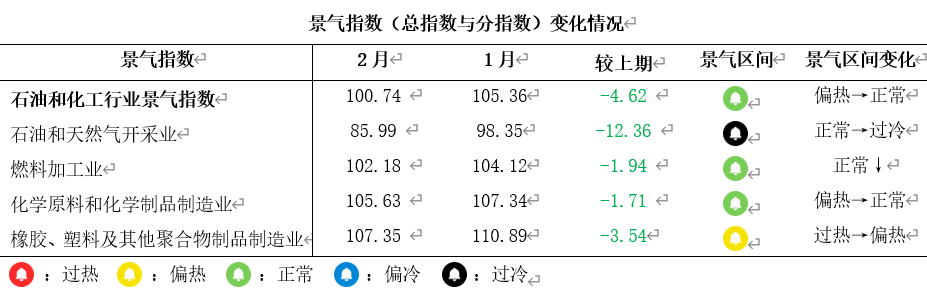
This year, benefiting from the longest Spring Festival holiday in history, cross-regional travel demand for family visits and tourism was released in a concentrated manner, leading to frequent peak traffic on highways and directly boosting gasoline consumption. However, in stark contrast to the surge in residential travel, industrial and infrastructure production activities generally slowed down during the Spring Festival, resulting in diesel consumption entering its traditional annual low period. Daily consumption declined significantly compared to the previous period, and refineries and social inventories faced increasing pressure. This divergence between strong gasoline and weak diesel has led to a complex situation in the fuel processing industry, characterized by both profit recovery and inventory pressure.
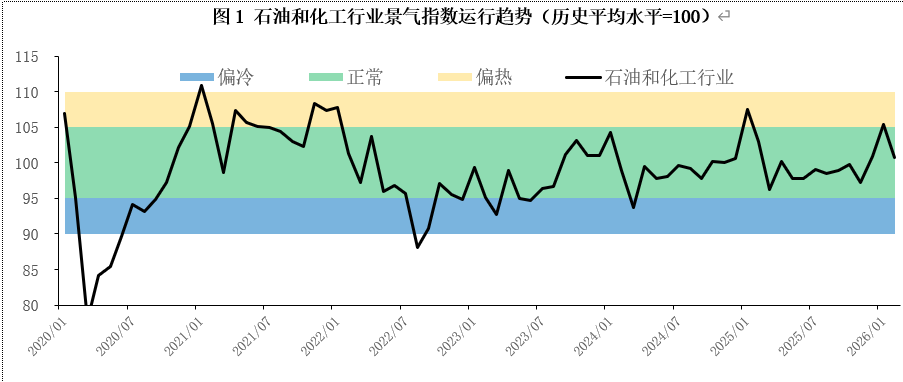
During the Spring Festival holiday, sales of home appliances and 3C digital products were booming, providing a temporary boost to the demand for petrochemical raw materials related to upstream rubber, plastics, and other polymer product manufacturing, thus improving industry expectations for post-holiday market performance. However, as the holiday ended, restocking intentions weakened, and terminal distributors generally entered a destocking cycle, leading to a marginal slowdown in new orders for petrochemical companies. Overall, February was characterized by hot travel, sluggish production, strong consumption, and slow restocking, clearly revealing the underlying logic of differentiation within the petrochemical industry and a general correction in its overall prosperity.
3. Outlook for the Petroleum and Chemical Industry
In March 2026, the oil and chemical industry will continue to be affected by macroeconomic factors, costs, and demand. On the macroeconomic front, the National People's Congress and the Chinese People's Political Consultative Conference (NPC & CPPCC) will release policy signals, pointing the way for market trends in 2026. Regarding crude oil prices, if geopolitical tensions in the Middle East do not ease and the Strait of Hormuz remains closed, crude oil risk premiums and high volatility are expected to persist in March, potentially leading to further price increases. On the demand side, the slow resumption of production and operations downstream after the Spring Festival, coupled with rising crude oil prices, will further squeeze the profits of the petrochemical industry. Terminal companies will only maintain basic demand purchases, lacking the motivation for concentrated restocking. Whether the previous downstream stockpiling demand based on cost advantages can be successfully converted into end-consumer demand, and whether the traditional peak season of "Golden March and Silver April" will arrive as scheduled, are key to the industry's recovery. Based on a comprehensive assessment of historical seasonal patterns and current data, the petrochemical industry prosperity index is expected to show a downward trend in March.


