

From “Imagination in the Cloud” to “Wisdom at the Root”: The Singularity Moment in the Chemical Indu
In the forest of pipes in the chemical industrial park, and beside the rotary kiln in the building materials factory, we often discuss a word: the sense of presence.
Over the past two years, artificial intelligence has been described as a "miracle in the cloud" on many occasions. But in the gasification furnace of Yuntianhua and the atmospheric and vacuum distillation unit of Jinzhou Petrochemical, the logic is very straightforward: if technology cannot be "fused" into every milligram of material change, it cannot be transformed into productivity.
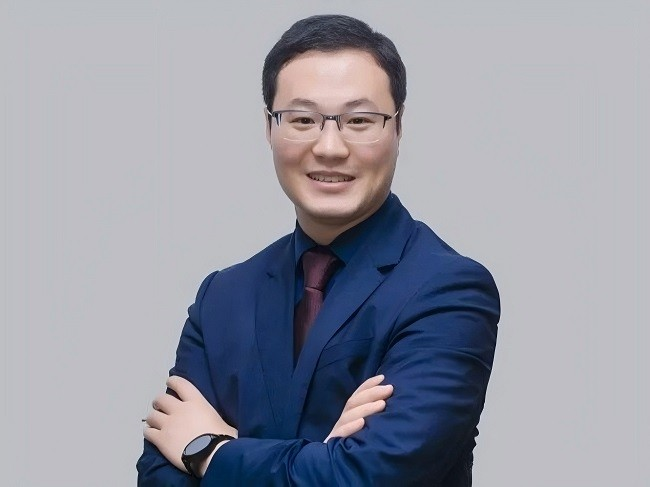
By Li Junpeng, President of Huawei's Chemical and Building Materials Division
As philosopher of science Thomas Kuhn once pointed out, scientific progress is not a linear accumulation, but a paradigm revolution triggered by disruptive technologies. We believe that the integration of AI with traditional industries should not stop at logical deductions in the cloud, but must be transformed into a kind of wisdom that penetrates deep into the "bottom of the pot" of production—only in this way can the industry usher in a singularity.
From auxiliary production to the "core of the business"
For a long time, the application of AI in industrial scenarios has mostly been limited to auxiliary processes such as visual monitoring and automated inspection. While this has improved efficiency in certain areas, it has not touched upon the high-value and complex production decision-making processes in the resource industry.
We believe that AI must evolve from a "production aid" role to a value creator in "core production." In the chemical and building materials sector, this means that AI should no longer be an external "electronic eye," but rather a "smart brain" embedded in the molecular process chain.
Taking Yuntianhua as an example, the coal gasification unit, as the "heart" of production, is directly affected by even slight fluctuations in its operating conditions, impacting energy consumption and safety. By introducing a large-scale RTO (Real-Time Online Optimization) model that integrates "mechanism + AI," the system achieves second-level prediction and closed-loop control of key parameters such as gasifier temperature and slag layer thickness. This reduces the unit's coal consumption by 1.33%, increases the annual efficiency of a single furnace by 10.67 million yuan, and raises the automation rate to over 95%.
This is the value of "wisdom at the heart of the matter": technology can only unleash productivity when it is deeply embedded in the core processes.
"Use-driven construction": Digital intelligence infrastructure iterates on demand.
Unlike the "build first, use later" logic of the internet industry, the digitalization path of the resource industry tends to be "build through use"—that is, to drive infrastructure iteration around scenarios that solve pain points in production and operation.
At Conch Group, predicting cement strength was a problem that had plagued the industry for decades, with delayed test results often leading to belated adjustments in production. The "Conch Cloud Engineering Model," built on Huawei's Stack cloud platform, uses deep learning from data from over 150 production lines to achieve "advanced assessment" of clinker strength, with a prediction accuracy exceeding 85% within ±1 MPa. Through real-time adjustments, standard coal consumption per production line has been reduced by 1%, resulting in an annual reduction of approximately 4,500 tons of carbon dioxide emissions.
This digital infrastructure, built from specific business pain points, avoids blind investment and achieves a "two-way convergence" of technology and business.
In the refining and chemical industry, Jinzhou Petrochemical also exemplifies this logic. Based on Huawei Cloud's "center-edge" dual-base system, AI enables minute-level quality soft measurement of the atmospheric and vacuum distillation unit with 97% accuracy, replacing manual testing. AI optimization maximizes product yield, adding 3.26 yuan per ton of oil, resulting in an annualized benefit of 8.79 million yuan. These cases collectively demonstrate that when AI is deeply involved in core control, it can become the most critical element for enterprises to increase production and efficiency.
Crossing the singularity, moving from single-point breakthroughs to ecological resonance
When innovation in a single scenario is transformed into a scalable and replicable business loop, a new productivity paradigm will irreversibly reshape the industrial landscape.
Synthetic rubber is a critical strategic resource, but its research and development has long been hampered by trial and error. Huawei is collaborating with pioneers to accelerate the development of new rubber varieties using AI, aiming to address the structural shortage and drive a paradigm shift in research and development. Significant progress has already been made.
Meanwhile, at Lanzhou Petrochemical, addressing pain points such as the harsh environment for synthetic rubber quality inspection, we utilized AI-powered large-scale models to achieve fully automated testing, increasing the accuracy of quality inspection from 70% to 95% compared to manual methods, and improving efficiency by 15%. Currently, this solution is being rapidly rolled out to major petrochemical bases. This "single-point breakthrough, multi-point replication" model is the key to overcoming the singularity.
To accelerate this process, Huawei is committed to strengthening the foundation for the AI era. For example, based on NIICA (Network Intelligent Industrial Control Architecture) for process industries, we launched SPE (Single-Pair Ethernet) technology to achieve "fiber-to-the-home" technology. This increases the communication bandwidth of field instruments from 38K to 10Mbps, transforming them from a muddy mountain road to a highway, opening up the "blood vessels" of data, and enabling large AI models to obtain high-quality real-time "fuel".
Looking ahead, the intelligentization of the resource industry should not be a solitary endeavor, but rather a collaborative effort among all stakeholders. Huawei will continue to focus on ICT infrastructure, working with partners to build industry middleware platforms to bridge the gap between technology and applications. When AI is integrated into every milligram of material change, and when algorithms imbue traditional equipment with intelligence, the chemical and building materials industry will cross the singularity and move towards a safer, greener, and more sustainable future of high-quality development. (Huawei Intelligent Mining & Oil & Gas)


