

Darkening and gate burning of halogen-free flame-retardant HTN during injection molding: Material & process troubleshooting guide
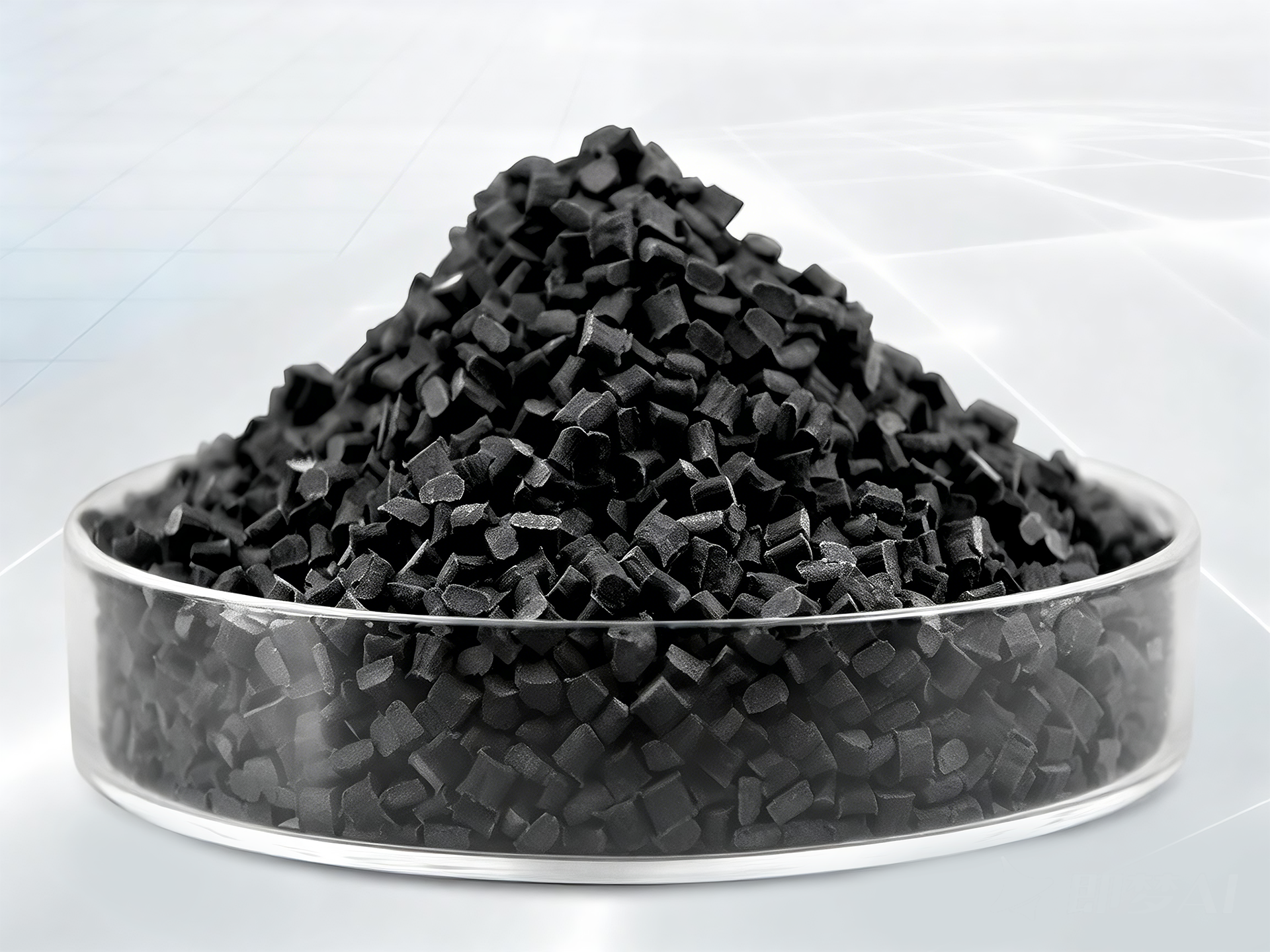
Halogen‑free flame‑retardant high‑temperature nylon is widely used in new‑energy high‑voltage connectors and SMT electronic components.
Nevertheless, many injection‑molding practitioners have encountered the same troublesome issue: with an unchanged formulation, molded parts turn dark, and black discoloration occurs specifically at gate locations. This defect is even more problematic for natural‑white components.
Discoloration is not merely an aesthetic flaw. For high‑temperature nylon systems, discoloration often indicates material degradation and progressive loss of mechanical properties.To stabilize part color, troubleshooting must be performed across three dimensions: material, processing technology, and mold.
I. Root‑Cause Analysis: Where Does Discoloration Occur?
1. Material Factors: Thermal Resistance and Moisture Are Two Critical Challenges
Flame retardants cannot withstand high temperatures. Halogen‑free flame retardants (especially phosphinate or nitrogen‑phosphorus systems) with insufficient thermal stability will decompose under high processing temperatures. Typical manifestations include overall yellowing and rapid mold deposit buildup on mold surfaces.
Antioxidants are fully consumed. Hindered‑phenol antioxidants deplete rapidly at elevated temperatures. Once exhausted, thermo‑oxidative degradation proceeds unchecked, inevitably causing color drift after long‑term thermal aging.
Inadequate moisture removal. This is the most frequent root cause. Residual moisture enters the melt and triggers hydrolysis. Amide‑bond cleavage generates chromogenic groups, resulting in dark‑colored molded parts accompanied by deteriorated mechanical performance.
2. Processing Factors: Barrel Temperature and Shear Heat Are Core Variables
Relevant process test data demonstrates that barrel temperature exerts a profound influence on discoloration. Excessively high barrel temperatures drastically raise risks of gate blackening and overall darkening of molded articles.
Furthermore, undersized gates combined with high injection speed generate localized high temperatures from intense shear. Prolonged melt residence time inside the barrel also leads to degradation from repeated thermal exposure.
3. Mold Factors: Venting and Gate Design
Decomposition of flame retardants generates gaseous by‑products. Poor mold venting causes adiabatic compressive heating of trapped gases within the mold cavity, triggering localized burning. Excessively small gates likewise induce overheating from high shear, directly producing black marks at gate positions.
II. Systematic Solutions: Three‑Step Countermeasures
Step 1: Material‑Level Optimization
Select thermally robust flame retardants: Phosphinate‑based flame retardants generally feature decomposition temperatures above 300 °C, offering a processing window compatible with high‑temperature nylon. Always refer to the material’s Technical Data Sheet (TDS) for specific grades. For intumescent nitrogen‑phosphorus flame retardants, verify that their thermal rating matches processing requirements.
Use antioxidant blends: A single antioxidant type is insufficient. Adopt compounded antioxidant systems.
Implement strict drying protocols: Keep moisture content below 0.1 % prior to processing; for precision components, tighten the specification to less than 0.05 %.
Switch to high‑temperature‑resistant lubricants: Conventional EBS readily decomposes and discolors under high heat. High‑molecular‑weight silicone masterbatches or montanate esters (E‑wax, OP‑wax) with thermal resistance above 300 °C are recommended alternatives.
Step 2: Precision Injection‑Molding Parameter Tuning
Barrel temperature: Avoid both overheating and under‑heating. Excessively high temperatures decompose flame retardants and cause blackening; overly low temperatures result in severe glass‑fiber bloom and incomplete cavity filling. Recommended setting: 285‑295 °C. Maintain a lower temperature at the feed throat, gradually increase temperature along the compression zone, and slightly reduce nozzle temperature to prevent drooling.
Injection speed: Fill the main cavity at medium‑to‑high speed (60‑80 % of maximum). Reduce speed to 20‑40 % near full cavity fill to facilitate gas evacuation. Too low speed aggravates glass‑fiber bloom; excessive speed induces gate blackening.
Mold temperature: Maintain at 80‑120 °C. Low mold temperature leads to heavy glass‑fiber bloom and poor surface gloss; overly high mold temperature accelerates flame‑retardant blooming and heavy mold deposit formation.
Screw speed and backpressure: Set screw rotational speed to 30‑60 rpm to minimize shear heat. Apply backpressure of 0.5‑1.5 MPa to guarantee homogeneous plasticization without thermal overloading.
Step 3: Mold‑Level Improvements
Enlarge vent slots: Halogen‑free flame‑retardant high‑temperature nylon generates substantial decomposition gas. Vent‑slot depth should be set to 0.02‑0.04 mm.
Optimize gate geometry: Avoid undersized gates to mitigate localized shear heating.
Regular mold‑deposit cleaning: Decomposed flame‑retardant residues readily adhere to mold surfaces. Periodic cleaning preserves effective venting performance.
III. Targeted Remedies for Typical Discoloration Defects
Overall yellowing: Mostly caused by excessive barrel temperature, flame‑retardant decomposition or insufficient antioxidant loading.Solutions: Lower barrel temperature; adopt higher‑thermal‑stability flame retardants; increase antioxidant dosage.
Gate blackening: Resulting from localized shear‑induced overheating.Solutions: Enlarge gate dimensions; reduce injection speed.
Weld‑line blackening: Caused by trapped air and local overheating.Solutions: Improve venting; decrease injection speed in late‑stage filling.
Surface whitening: Originates from low‑molecular‑weight component blooming.Solutions: Reduce mold temperature; upgrade thermal stability of the flame‑retardant system.
Summary
Discoloration during injection molding of halogen‑free flame‑retardant high‑temperature nylon essentially reflects the competition between material thermal stability and the melt’s thermal history throughout molding.
Secure material performance, precisely control processing temperatures, and guarantee adequate mold venting. With these three measures properly implemented, discoloration can be kept within acceptable limits.


